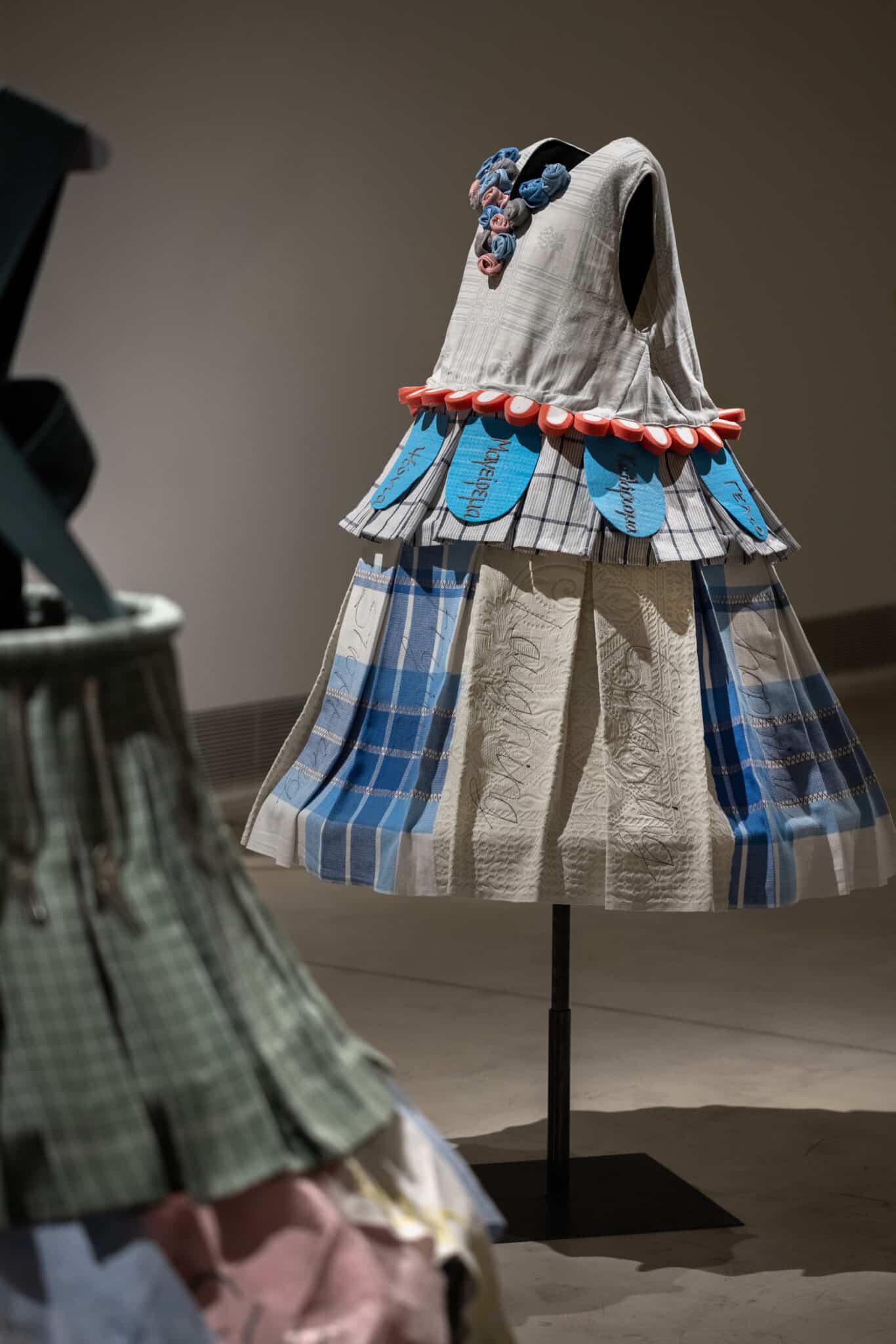
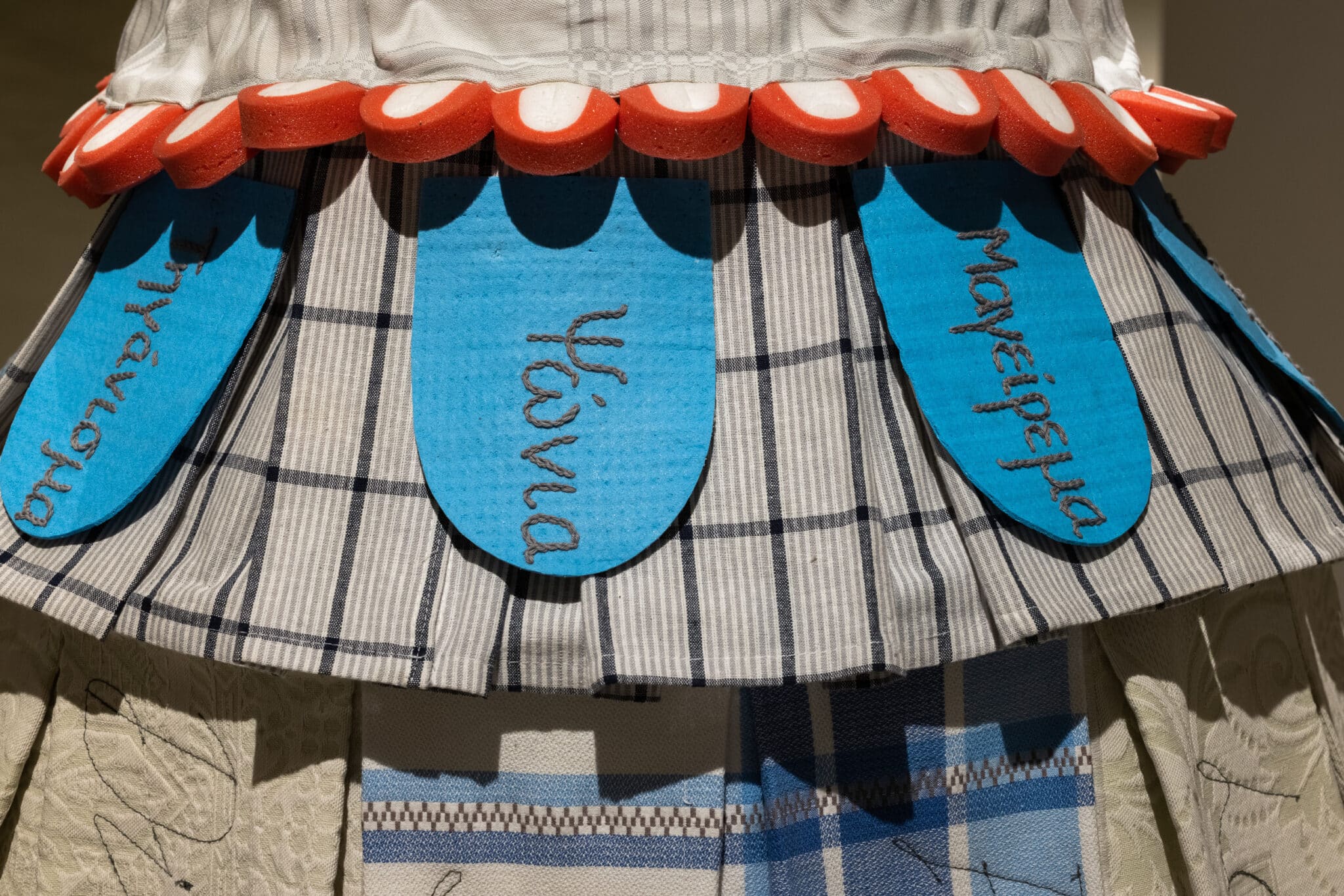
Reproductive Dresses
2022
Excerpt from EVERYTHING EVERYWHERE ALL THE TIME:
I understand as “reproductive” all the daily tasks that are necessary to keep us going, to sustain us. For example, childcare, domestic chores, responding to social obligations, etc. Unlike “productive tasks,” they are not part of the official economy, they are not paid, nor do they create surplus value. But, at the same time, they are necessary for production and for the economy. Although reproductive work is one of the most important pillars of society, far more cultural value is placed on productive work: it is easier to get excited about a new product or a paid activity than about doing the dishes or the sweeping up. Moreover, from a historical perspective, in many cultures women have been responsible for what are considered reproductive and more menial tasks. This is reflected today in the labour market, where women are more likely to end up doing so-called non-promotable tasks, such as making coffee before meetings, taking notes or emptying the dishwasher at the office.
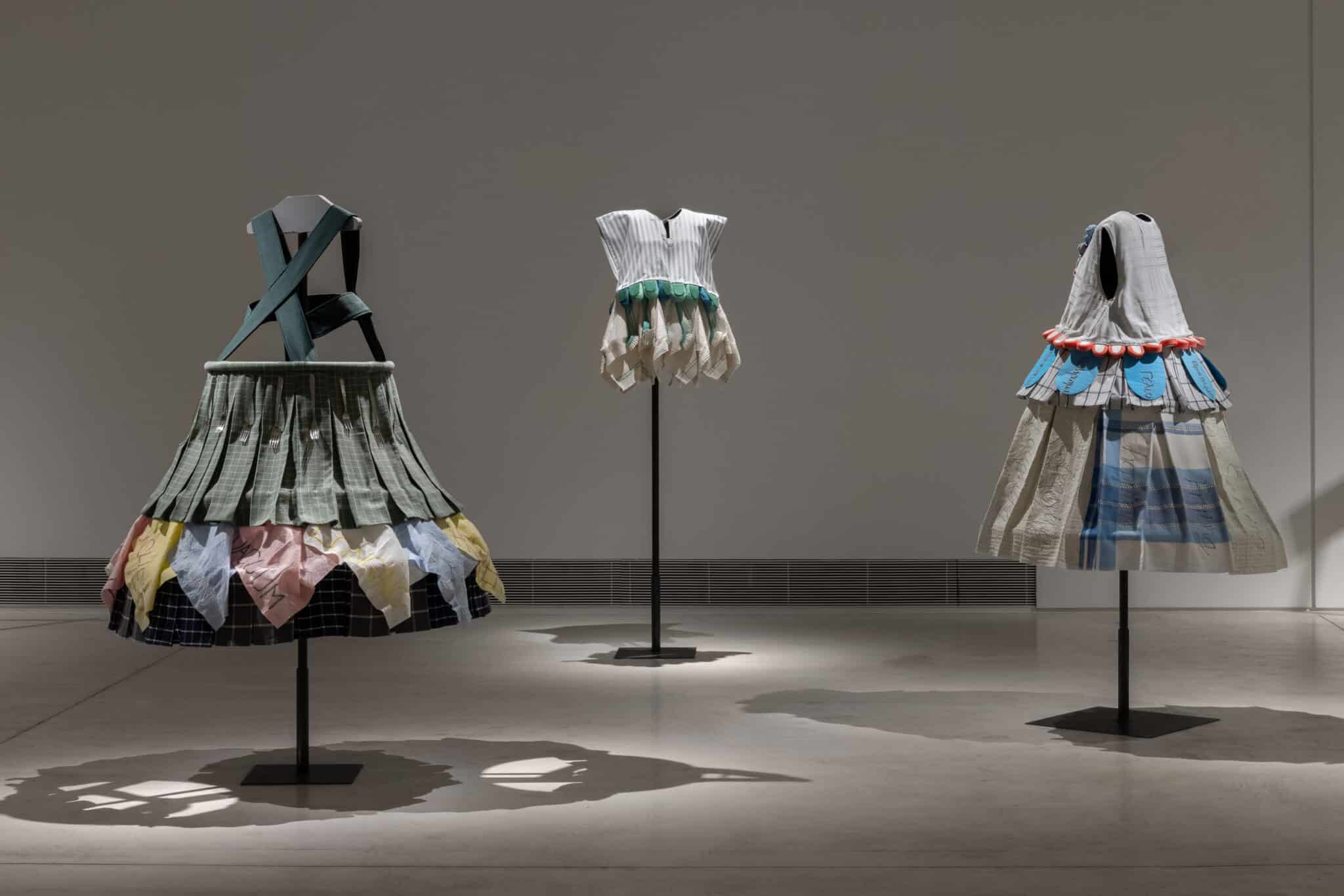
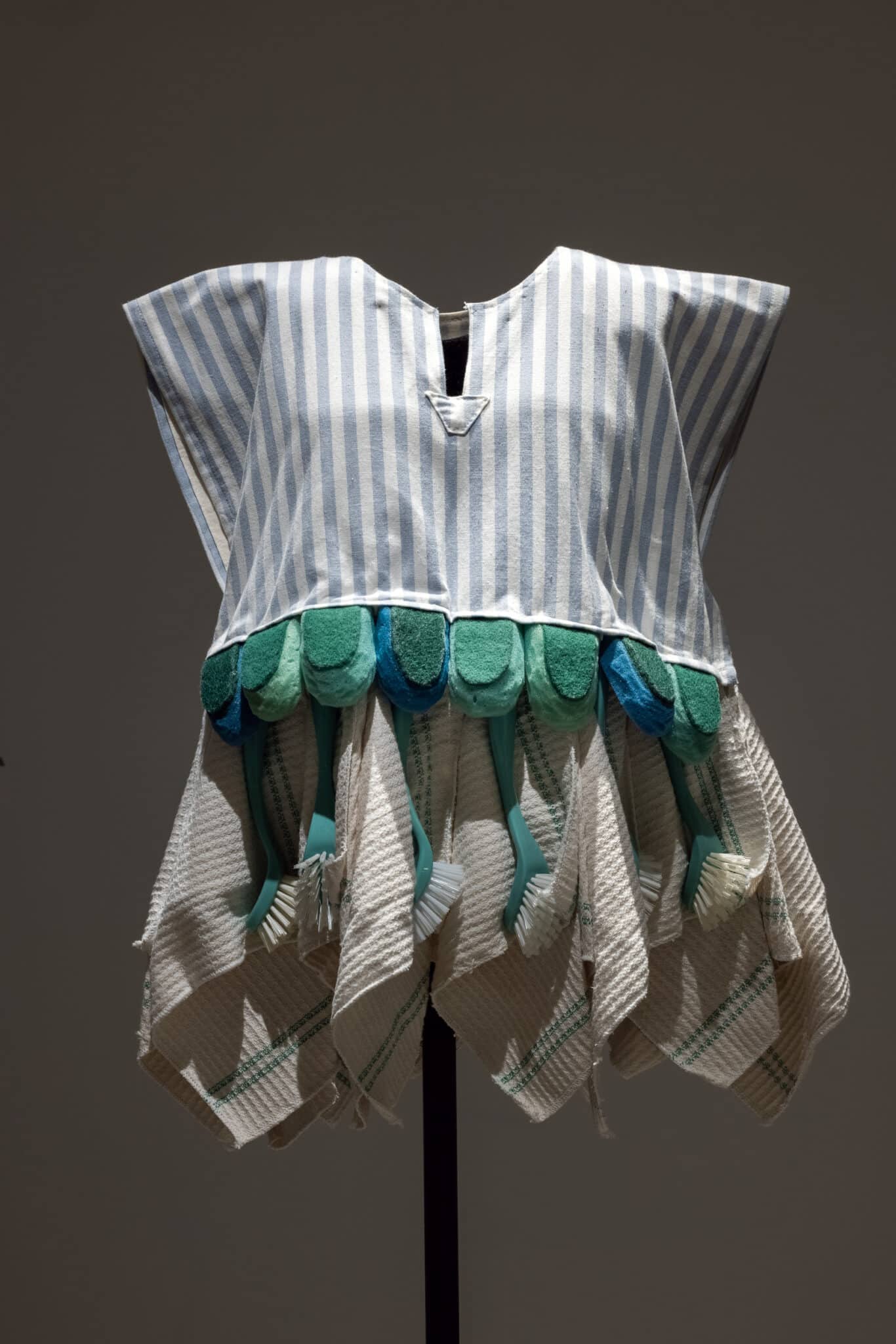
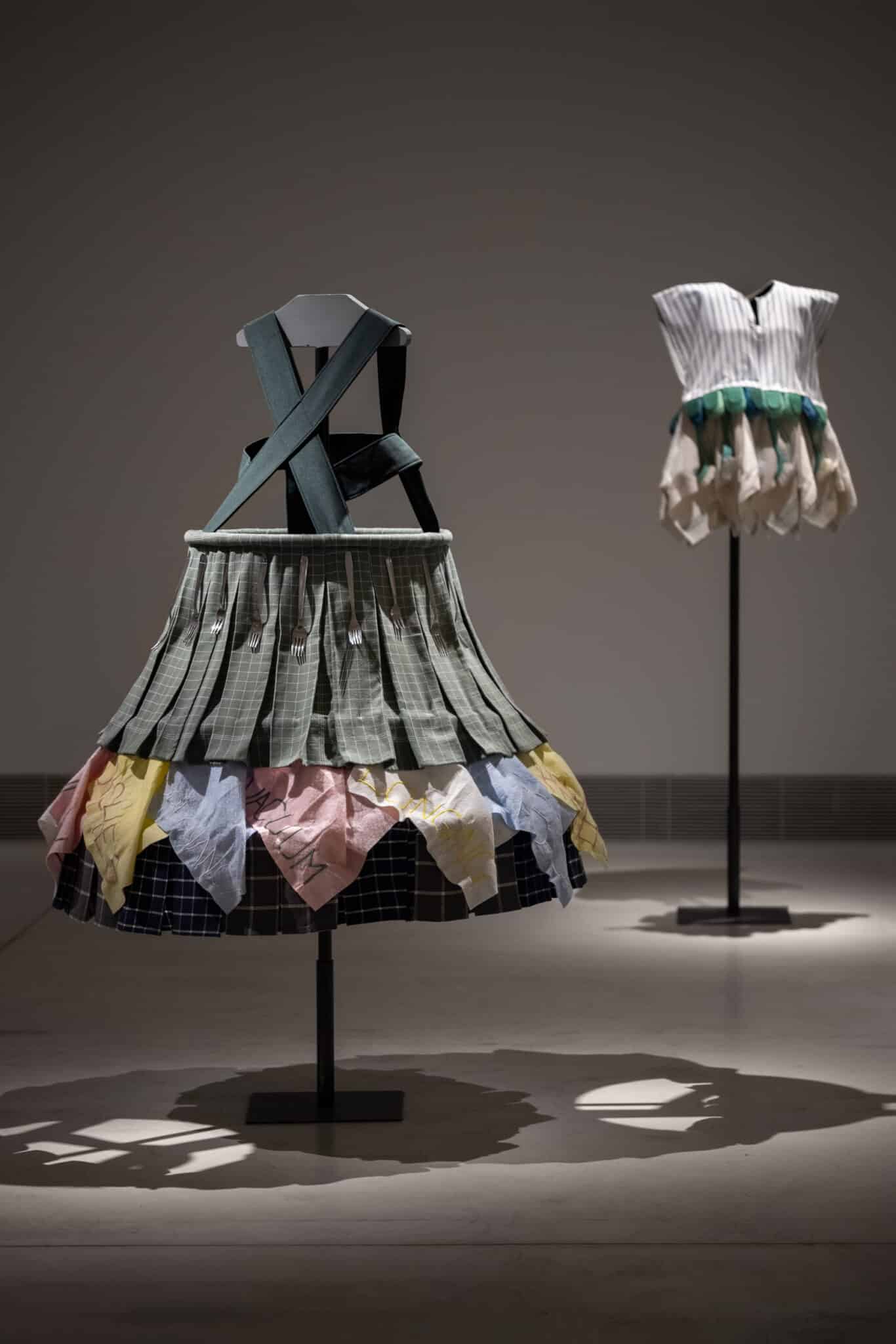
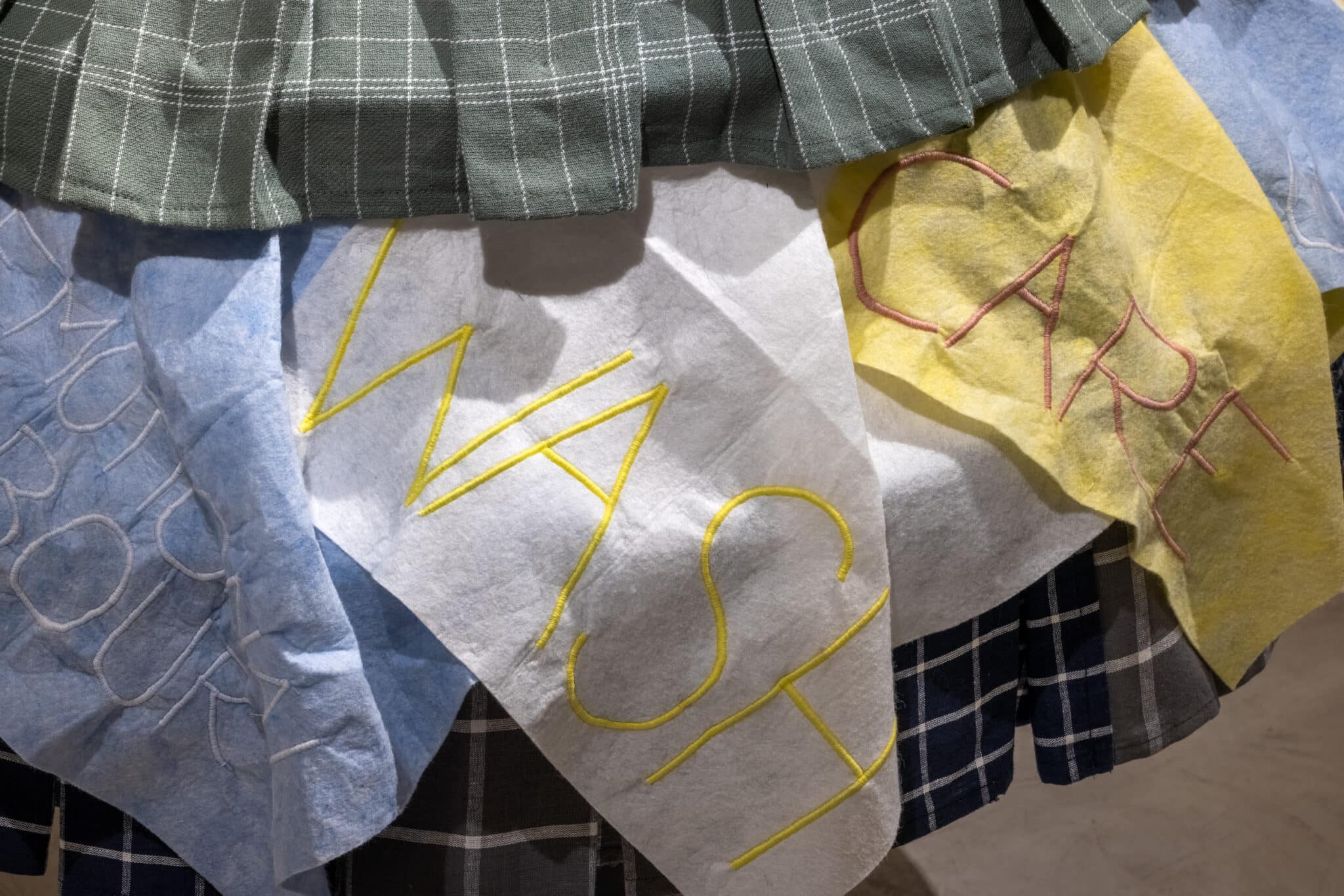
Emotional Labour, Reproductive Labour and Domestic Labour highlight and celebrate reproductive tasks. They are festive dresses but are made out of tablecloths, dish towels and sponges. Embroidered with words such as ‘cleaning’ and ‘cooking’ that refer to reproductive domestic labour, but also words such as ‘laughing’ that draw attention to the fact that maintaining a good atmosphere – at work or at home – is an aspect of emotional labour usually, but not always, carried out by women. – Hannah Toticki
Photos by Paris Tavitian